The current state of people professionals’ wellbeing
Starting with some positive changes, in the 2023 People Profession Survey, we’ve seen an increase in the proportion of people professionals reporting that work has a positive impact on both their mental and physical health, compared to one year ago (CIPD, 2023). In fact, figures have increased significantly for people professionals in Ireland (see figure below). Essentially, people professionals are more likely to report that work is having a positive influence on their overall wellbeing, than a year ago. This feels like the easing of the long-term post-pandemic baggage and subsequent permacrisis that followed.
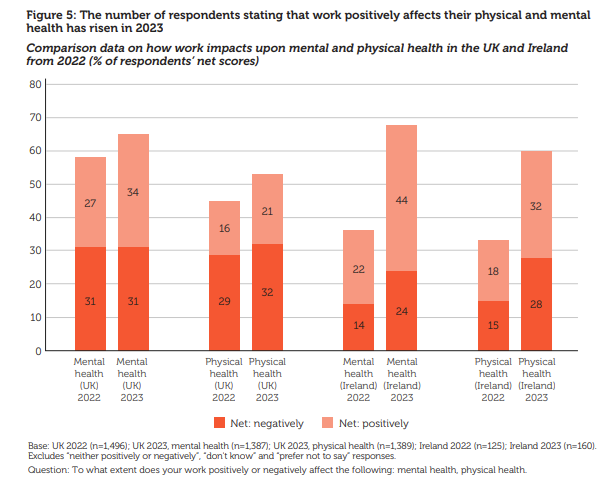
However, the proportion of people professionals who report the negative impact of work on their health hasn’t shifted. Worryingly, just under a third of UK people professionals still say their work impacts negatively on their mental and physical health. And in Ireland, this is proportionately more than it was a year ago.
Outside of the profession, CIPD’s Health and wellbeing at work survey found that stress is a contributing factor and one of the main causes of short- and long-term sickness absence, with 76% of respondents reporting some level of stress-related absence in their organisations (CIPD & Simplyhealth, 2023). So work-related stress is a persistent issue, both in the profession and amongst the wider workforce. But if we’re expecting HR professionals to champion good (and healthy) work in their organisations, we need to start with the profession itself.
So, what can people professionals do to support their own wellbeing and protect themselves from chronic work-related stress?
Your boundaries
It sounds simple, but time management and setting boundaries so that work doesn’t encroach on your home life can really help you to switch off, recharge and be present. People often have different boundaries when it comes to work and home life. Some might choose to integrate their work closely with their personal lives. Figure out what works best for you, commit to your ways of working and be vocal about this with your team and colleagues.
Seek support when you need it
Whether it’s wellbeing support or legal help, CIPD members can access a 24-hour, confidential specialist helpline. Beyond that, if you recognise that it’s time to get some help, there are a number of charities that provide sound information and support, especially if you’re struggling and don’t know where to start. MIND is perhaps one of the most recognised charities that campaigns for mental health, and their website provides workplace resources to support colleagues and improve wellbeing in your organisation. Their resources cover burnout, hybrid and remote working as well as tips on how to be mentally healthy at work.
Root cause
Poor mental wellbeing can be a symptom of other health issues or factors that contribute to work-related stress. So, trying to figure out the root cause or triggers of what’s affecting your wellbeing is a good way to address whether there is a wider health issue or work-related problem that is impacting your wellbeing. Support from occupational health specialists can offer additional support where it’s needed.
Stay connected
A sense of community and connectedness can make a huge difference to our wellbeing. It’s easy to fall into the trap of feeling that our experiences are unique to us, but often practitioners have similar stories and experiences to share. Become part of our community of people professionals through our branch networks and online community and be involved in the latest thinking and conversation whilst accessing a fountain of knowledge and growing your network.
Give back to the profession
One of the five ways to wellbeing is the act of giving back and this can certainly be applied at work. It’s as simple as offering to help a colleague with something or introducing yourself to a new starter. Local CIPD branches also offer voluntary roles and there are mentoring and coaching opportunities with the CIPD trust to support and empower others within the profession. Whatever way you choose to give back, big or small, you’re bound to feel good about it!
A phrase which has been said countless times in recent years is that “we must fit our own oxygen mask, before we offer to help others fit theirs”. This is particularly fitting for HR professionals, who are so often concerned about the wellbeing of others that they forget to prioritise themselves at times. Let’s change that so that our working lives contribute positively to both our physical and mental health.
You can access more information about the wellbeing of people professionals from different regions in CIPD’s People Profession Asia Pacific and Middle East North Africa reports.